
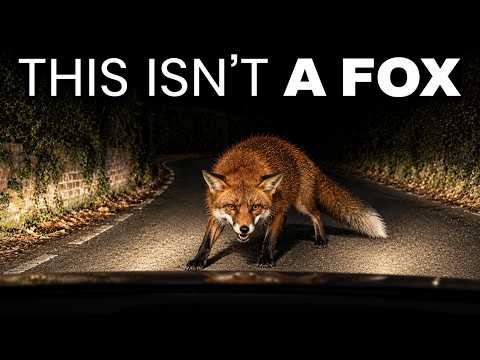
There are a large number of mistakes noted in this video. Some are simply people making a video and carrying out no real research -simply repeatr what has bbeen presented. Other inaccuracies are down to the scientists who presented the evidence.
In The Red Paper 2022 Canids it was shown through historical records that at one time the UK had three distinct fox types (without DNA tests it is difficult to state these were Vulpes sp) the coyote like Greyhound/mountain fox, the Hill/Mastif fox and the Cur or common fox. The first two only ventured near to farms or human habitation in the most desperate times such as harsh winters. The cur fox had always lived near human habitations such as villages where, apart from rodents, there was plentiful human food waste. Foxes are recorded as living in barns and even under farmyards (not touching chickens that were plentiful but catching rabbits).
We know from what is recorded that there were fox friendly people even on land belonging to local huntmasters and that these were "feeders". It is not a modern phenomenon. We know that foxes were living in towns and cities usually undetected until venturing out in daylight or having been locked in some premises. The excitement was always great and, rather like every jackal /exotic animal sighting of the time being blamed on a travelling menagerie, a fox sighted in the city was 'obviously' an escaped pet. End of story. "How could a wild fox survive in a city?" Again, human waste food, rats and mice were a good diet not to mention large iunsects.
Foxes are not loud and noisy creatures and people are, on the whole, about as observant as a plank of wood. Most likely, on seeing a fox, someone would think it a pet dog or even a pet cat (we still get that in 2026 because people think foxes are wolf sized animals).
Foxes have always been near human habitation and in the early Medieval period were also "farmed" in fox enclosures for fur and meat. This fictitious 1930s date was likely created by someone who sat in a college or university room and had "Professor" or "Doctor" in front of his name so was never questioned.
There is another major problem in this data and that is the skull sizes noted. Very likely some areas in the UK were imnporting foxes since the late 1500s when it was reported that they were becoming scarce due to fox hunting. At the height of the importing of foxes from Europe -=all detailed in accounts of the time- Leadenhall Market were importing well opver 1000 a year whil;e smaller marrkets and dealers would add an extra 1000+ to this. France, Norway, Netherlands, Spain -any country with foxes to catch and expert to England did so. It was quite a large trade in France.
These imported foxes were again, hunted to near extinction (the Old British fox vanishing by the 1860s during "The Golden Age of Hunting") and more were imported. Various problems meant that at one point English hunts were "stealing" foxes from the territory of Irish hunts (who had depleted their opwn fopxes anyway) and this led to questions in Parliament and itr was considered a "diplomatic matter".
This means that skul;ls tested are not of a species that has always been here but one that became native via importation to replace the 'lost' species. So DNA testing largely shows European DNA. Well, 'big shock' and waste of time and money there. We are also talking about a species that was brought to the UK from at the very least from ten (10) countries. Some were bred in British hunt stables to avoid paying out for imports so a fox from Germanyt might be bred with a fox from the Netherlands or France or evenm Russia. This is going to lead to some skeletal/skull changes and often features created through breeding a locally "perfect for the hunt" fox (there was no real science or knowledge here just attempts at mix and matching foxes 0they even tried to breed fox-jackal, jackal-wolf and even added coyote into the madness.
Why are foxes in the cities and towns? Already stated. They moved around and found their main food source -rabbits- on the outskirts then found rats, mice and much more including food waste. I should point out that bin raiding is very unlikely since moist of the country moved to large wheelie bins in the 1980s.
One fact slaps the "it was safer and easier in cities" theory in the face. World War Two. Cities bombed -noise, damage and people rushing around and digging through debris cause more noise and activity than a fox can bear. Some likely could do well following the war since the big problem was rats and mice. And the rubbled ruins would be great dens -in Bristol some bomb sites were not cleared and built on until the 1970s.
Foxes have intelliegence and with farmers shooting them and their young and hunts constantly posing threats especially during the 'fun' cubbing season the species would look for a safe place where the threat was not constant, where there was food and shelter to den up and keep young safe. Neighbours talking about seeing a fluffy tailed "big ginger tom cat" tipping over the old aluminium bins to get to food scraps makes sense. One woman asked me about an "unusual cat" that kept passing through her garden. It was a fox. "But it's so small. My cat is bigger than that!" Also, at one point in the 1960s, some local men going out with torches to find the scream from a woman also makes sense.
As one person put it to me in a rather belligerent way in the 1970s: "This is a city. You do not get foxes in cities. It was a cat!"
Put out all the educational material you want and people will stil;l believe what they want to.
In the case of fox skull sizes I do not think what was presented shows anything. No evolution or how this is changing foxes and how they think. After 50 yearsI can tell you that foxes come in all shapes and sizes because of their historic breeding base. The biggest changes in foxes is one the "scientists" have missed out on because they are just lookiung at skulls; colouration. The Old British fox could be brown (a mottl;ed type fure), yellowish, white but black is not rewcorded. We had a massive influx of release fox fur farm animals in the 1950s when the trade failed. Silver foxes as well as (again) imported foxes were put out into the population -descendents of some of these are quite impressive.
In the last30 years we have seen a greadual change in fox colouration. Some local foxes are "cherry red" while others a more orange colour, there are the "salt and pepper" fur types and even white and black have been known/photographed. The surprise is that there are more grey coloured foxes around. I first noted these in the SE of England but then they have 'spread' to the South coast and aboutr six years ago images of grey coloured foxes came from Bristol. Even very dark, almost black colourations. This is a sign of melanism and in some areas we knopw this has come about via interbreeding between red foxes and released silver foxes -the history of these is known and recorded particularly by Black Foxes UK.
The increasing prevalence of black wolves is primarily due to a genetic mutation inherited from domestic dogs, which provides advantages in certain environments, especially against canine distemper. This mutation, known as melanism, results in increased production of melanin, giving the coat a dark color. Black wolves are more common in North America, particularly in regions like Yellowstone National Park, where the gene variant enhances survival during distemper outbreaks. Additionally, the black coat can offer better camouflage in forested areas, making it easier for wolves to stalk prey.
Now, despite the belief that a fox and a dog can successfully mate they cannot. I have spent a lot of years looking at all the Dox (dog-fox) claims and not one has proven to be true. Therefore, one has to ask why melanism is becoming far more common in UK foxes? I think that the first reason is red fox-silver fox interbreeding so that some of the offspring are born black. The second reason may well be down to changes to fight off disease. The Bristol Fox Necropsy study showed that babesia and leptospirosis (which foxes normally have anti bodies to especially since their main food source -rats- carries lepto) as well as other illnesses are claiming fox lives and in part this may be due to changes in the environment -something no one has looked into because "just foxes".
The colouration changes do not indicate a seperate species as some keep thinkinjg just localised variants wherfe past gene pools, environmental changes etc may have created necessary muations.
The ominous "Something DIFFERENT" title of this video just goes to show that a little scare factor added to a video on research results that may well be inaccurate or need re-appraing goes to show that after all this time the true history of foxes in the UK and Eire has not been undserstood.
**************************************************************

When the Doggerland bridge flooded the British Isles became separated from
Continental Europe and its wildlife developed uniquely. The British Isles, for the purpose of this work includes Ireland, and isolated the wolves on both became what would be island species not affected by the usual island dwarfism. These wolves, after millennia. Became “unwanted” and forests and woodland was burnt down or cut down for the specific purpose of lupicide; the killing of every and any wolf –and there was a bounty for “a job well done”. At the same time there also developed three unique island species of Old fox from the coyote-like Mountain or Greyhound fox, the slightly smaller but robustly built Mastiff or Bulldog fox and the smaller Common or Cur fox –the latter like today’s red foxes had a symbiotic relationship with humans. These canids were mainly ignored until it was decided that they could provide fur and meat and those things earn money. From that point onward, especially after all other game had been killed off, the fox faced what writers over the centuries referred to as vulpicide –extermination through bounties paid, trapping or hunting and despite all the hunters noting that the Old foxes were nearing extinction they continued to hunt until by the late 1880s the Old were gone and replaced by the New –foxes imported by the thousands every year for the ‘sport’ of fox hunting and this importation also led the the UK seeing the appearance of mange (unknown before the importations). The travelling British sportsmen went coyote, wolf and jackal hunting and on returning to England wanted to bring a taste of this to “the good old country”. Wolves, jackals and coyotes were set up in hunting territories from where they could learn the lay of the land and provide good sport later. Some hunts even attempted to cross-breed foxes, jackals and Coyotes. Then there were the legendary –almost mythical– “beasts”; the black beast of Edale, the killer canids of Cavan and the “girt dog” of Ennerdale. In more recent times raccoon dogs and arctic foxes have appeared in the UK; some released for ‘sport’ while others are exotic escapees long since established in the countryside. If you thought you knew what fox hunting was about prepare to be woken up by a sharp slap to the face and the reality that, by admissions of hunts themselves, this was all about fun and sport and nothing to do with “pest control”.



No comments:
Post a Comment